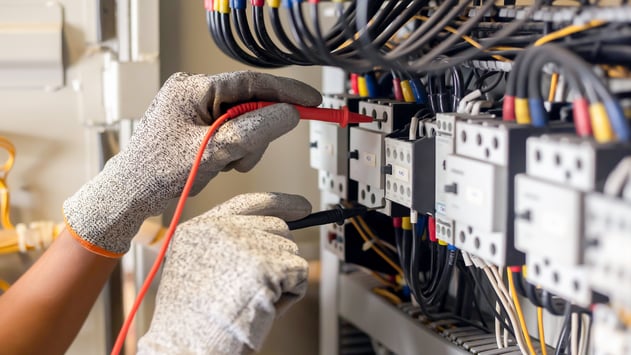
CSA Z462 Workplace Electrical Safety, developed by the Canadian Standards Association (CSA), provides requirements designed to protect individuals who may be exposed to electrical hazards in the workplace.
One of the primary risks addressed by this standard is arc flash and electrical shock, along with the preventive measures organizations should implement to reduce harm caused by unsafe electrical work.
To understand the importance of CSA Z462, it helps to first understand what an arc flash is, what causes it and why it poses such a serious danger.
What is an arc flash?
An arc flash is a sudden release of electrical energy through the air when a high-voltage gap exists and electricity travels between conductors.
During an arc flash event, large amounts of thermal radiation and intense light are produced. These conditions can cause severe burns and other serious injuries to workers nearby.
Temperatures during an arc flash have been recorded as high as 35,000 degrees Fahrenheit, hot enough to burn skin instantly and ignite clothing.
Arc flashes can also generate powerful pressure waves. This rapid expansion of heated air creates what is known as an arc blast, which can strike workers with explosive force.
Metal droplets from melted copper or aluminum components can be propelled outward at speeds of up to 1,127 kilometers per hour (700 miles per hour), creating dangerous shrapnel that can penetrate the body.
What causes an arc flash?
Arc flash incidents may occur spontaneously or when electrical contacts are unintentionally bridged by a conductive object.
Common causes include:
- Dropped tools contacting energized equipment
- Conductive dust accumulation
- Corrosion or equipment degradation
- Improper maintenance or unsafe work practices
Understanding these risks is essential to preventing arc flash incidents in electrical environments.
Arc flash awareness and workplace risks
Although improvements in equipment design have reduced the number of arc flash incidents, electrical hazards remain a serious workplace safety concern.
Each year, 2,000 workers are admitted to burn centres for treatment of severe arc flash injuries.
While many safety discussions focus on high-voltage systems, research shows that lower-voltage installations can also produce dangerous arc flash incidents.
Systems operating at 120/208 volts, when supplied by transformers rated at 125 kVA or greater, can still create significant arc flash hazards.
This highlights the importance of implementing proper electrical safety procedures across all electrical systems—not only high-voltage installations.
How CSA Z462 supports workplace electrical safety
CSA Z462 has been in use in Canada since January 2009 and has gained recognition from many provincial health and safety authorities.
Several Canadian regulatory organizations reference CSA Z462 as guidance when developing electrical safety programs and workplace procedures.
Examples include:
These recommendations demonstrate the growing role CSA Z462 plays in helping organizations develop structured electrical safety programs.
.png?width=190&height=71&name=VF-Canada-v1%20(1).png)